- Home
- News Room
- Patient Stories Search Page
- sickle cell gene therapy

January 23, 2026
Stephon Fisher is a normal guy. He works, he hangs out with friends, he enjoys time with his family, he plans for a healthy future. And this type of existence is new to him. Stephon is the first person to undergo a remarkable new therapy at The University of Kansas Cancer Center that freed him from a lifetime of pain marked by regular hospital stays due to sickle cell disease.
“I feel amazing,” says Stephon of his life today. “I do feel like I’ve been able to reclaim an aspect of my life that I never had.”
Undergoing gene therapy reprogrammed his body’s ability to produce normal red blood cells and allowed the 30-year-old engineering technician to finally put his disease on the back burner while he forges ahead with life.
No stranger to pain
Sickle cell disease is an inherited condition that disproportionately affects people with African or Middle Eastern ancestry in which red blood cells are misshapen into a crescent or sickle shape. These cells block normal blood flow and cause anemia and other potential health problems. When the sickle-shaped cells stick to blood vessel walls they stop or slow blood flow and oxygenation to cells and tissue, causing severe pain, often referred to as a “pain crisis.”
Stephon was no stranger to pain crises, and sickle cell disease defined his childhood. “I was in the hospital maybe 2 or 3 times a year,” he recalls. “I was afraid to do strenuous activity because of my condition, so I didn’t really play sports, and my parents didn’t want me to be unsupervised for too long because they were afraid of what would happen.”
As a college student in Tennessee, working and studying, Stephon was stressed and going to the local hospital’s emergency department every 2 to 3 months with severe pain. One night, while he was triaged and admitted to get the drug and oxygen treatments needed to quell the pain, a nurse said in an offhand manner, “You know, they’re curing this now” and followed up with contact information for a physician who was part of a group studying the use of gene therapy for sickle cell disease.
Stephon wasn’t ready to commit to a clinical trial. “I was trying to finish my degree, I was really cautious, and it just wasn’t the right time for me,” he says. But gene therapy was on Stephon’s radar, and when he settled in Overland Park, Kansas, and began his career he made an appointment with Robert Kribs, MD, a hematologist with the cancer center.
Dr. Kribs was enthusiastic about gene therapy’s possibilities based on research data, but the treatment wasn’t yet widely available. However, the door was open, and when the cancer center began offering the new treatment, Dr. Kribs contacted Stephon. This time, Stephon was ready.
The gene therapy process
Gene therapy for sickle cell disease is a process that takes months, and Jodi Wilson shepherds patients and their families through it all as a transplant coordinator at the cancer center. She helps coordinate appointments with various physicians, provides education, manages logistics and offers emotional support along the way. She remembers meeting Stephon with his parents for his first hour-long consultation packed with information. “It’s always good when a patient brings 1 or 2 supportive people along because we give them so much information up front,” she notes.
After meeting with Jodi, patients talk with a social worker and financial coordinator to begin the process of getting insurance approvals for the complex procedure. Stephon notes that his employer-sponsored insurance and understanding managers who gave him time off to pursue gene therapy were key to his ability to receive the treatment, which costs more than $3 million.
An EKG, physical exam and cognitive assessment round out the initial physical evaluation. New patients also meet with a social worker and financial coordinator during their first visit to ensure they have the support they need from the beginning of their journey. “It all just helps us determine if that person will be able to proceed with the treatment and what challenges we’ll have to work with right from the beginning,” Jodi says.
Joining Stephon and Jodi in that first meeting was Nausheen Ahmed, MD, a cancer center hematologist and researcher in stem-cell transplantation and other types of new cell therapies to treat blood cancers and related diseases. Dr. Ahmed oversaw the specifics of Stephon’s treatment as the cancer center’s first patient receiving gene therapy for sickle cell disease.
“Traditional treatments help control the disease, but the pain crises affect quality of life for these patients,” Dr. Ahmed says. “So gene therapy is attractive for the sickle cell population because it offers a treatment to potentially change the course of the disease. Patients can be off the other medications and no longer need transfusions and frequent ER visits. It’s truly transformative.”
After gene therapy, sickle cells may still be present but at lower concentrations. Meanwhile, the patient begins producing cells that prevent the dangerous effects of sickle cells clumping or blocking blood flow. The patient’s physiology changes because the patient’s own stem cells, which are produced in bone marrow and become red blood cells, are genetically altered so that they program the production of normal cells instead of sickle cells, Dr. Ahmed explains.
Stephon’s journey
The sickle cell gene therapy process begins with a battery of diagnostic tests to ensure there are no other major health concerns. Stephon recalls the testing and associated appointments took about 6 months to complete. Then the real work began.
Medications spur an increased number of the patient’s stem cells to enter the bloodstream, and the cells are collected in one or more appointments similar to a blood donation process. The stem cells are sent to a lab to be altered using gene editing technology. Meanwhile, the medical team watches carefully because the donation itself can trigger a pain crisis. Fortunately, Stephon did not experience a crisis related to the stem-cell collection process in what Dr. Ahmed calls “an auspicious beginning.”
Following this process, Stephon entered the hospital for high-dose chemotherapy. He remembers the infusions lasting a few days, priming his body for the introduction of his new, genetically modified stem cells. “The chemotherapy helps remove remaining bone marrow stem cells so there’s space for the new ones to populate the bone marrow,” Dr. Ahmed says.
Risk now shifts from pain crises to infection since the patient’s immune system has been compromised. With his bone marrow primed, the team infused Stephon with his genetically altered stem cells and monitored him as the cells began reproducing and manufacturing normal red blood cells.
“Stephon’s hemoglobin (red blood cell) counts began coming up to levels he hadn’t had before, and he wasn’t experiencing any pain crises. These were the cells that his body wanted, and they were working,” Dr. Ahmed says. Stephon spent a month in home quarantine when he was released from the hospital, slowly regaining strength and immune function.
Seven months after gene therapy, Stephon feels like a new person. Not only does he feel physically well, but he’s also beginning to allow himself to relax into a new normal. “I’ve always had the label of someone with sickle cell disease, and now I don’t have to keep putting that on myself,” he says. “I’m just grateful. And The University of Kansas Cancer Center was such a good place to be – they definitely know what they’re doing.”
Not every sickle cell patient is a candidate for gene therapy, but for those who qualify, the treatment is life-changing and appears to be durable. Dr. Ahmed and colleagues at the cancer center are enthused about the future of these kinds of therapies for treating a growing range of diseases.
“People here are excited about this curative therapy,” she says. “There’s a new sense of hope, and we’re living in a world where these possibilities are becoming more available to people.” Stephon is a living example of the power of this type of medical advancement, and he adds, “I never thought I’d have this chance, and I hope everyone in the sickle cell community is aware of it because it’s a lot to go through – but it’s so worth it.”
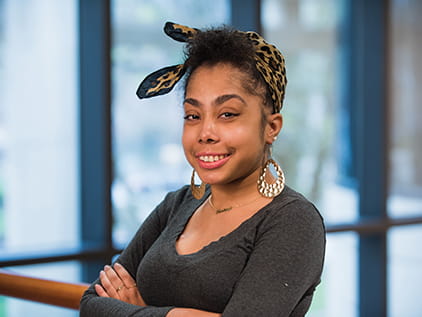
A future without limits
Desiree Ramirez faced a lifetime of hospitalizations and limitations – until she became the first Kansas adult to receive a stem cell transplant to cure sickle cell disease.
Desiree's story